The Fifteen-Day Clock Hiding Inside Every Bellevue Condo Sale
August 20, 2026
August 20, 2026
A Bellevue condo sale rarely falls apart over price. It stalls over a document nobody thought to order until it was too late to matter.
That document is the resale certificate, the state-mandated disclosure packet that discloses a condo association's finances, reserves, and pending assessments before a buyer can close. Most sellers treat it as a formality their agent or escrow officer will handle somewhere in the middle of the transaction. But the certificate runs on its own legal clock, separate from the purchase contract, and as of January 2026 that clock reaches into buildings it never touched before. The buildings it reaches hardest are not Bellevue's glass towers. They're the older, more affordable condos in Crossroads, Factoria, and the mid-rises along Bellevue Way, which is exactly where a first-time or budget-conscious buyer is most likely to be shopping.
Washington's condo and HOA law used to depend heavily on when a building's declaration was recorded. Communities formed after July 1, 2018 fell under the newer Washington Uniform Common Interest Ownership Act, known as WUCIOA, and its reserve study section. Communities formed earlier, under the older Condominium Act or Homeowners' Associations Act, were not required to follow that WUCIOA section at all unless their board voluntarily opted in.
Engrossed Substitute Senate Bill 5129, signed in April 2025, ended that carve-out. Its cross-applicability provisions took effect January 1, 2026, extending the WUCIOA reserve study requirement, along with several other core sections, to every common interest community in the state regardless of when it was formed. The underlying schedule itself is not exotic: an initial study based on a site visit, updated annually, with a full visual inspection by a reserve study professional at least every three years. What changed is how many older Bellevue boards can no longer treat that schedule as optional.
The resale certificate itself has not changed shape for these older buildings. If your building was formed before July 2018, it still uses the twenty-item disclosure format under RCW 64.34.425, not the twenty-six-item WUCIOA version, because the full transition to that longer form doesn't arrive until 2028. What changed is what has to be true behind that same twenty-item form. A board that could once check a box saying no current reserve study exists now has an obligation to actually produce one.
Buyers and agents tend to plan a closing timeline around inspection, appraisal, and loan underwriting. The resale certificate adds two clocks most people never budget for.
First, once a request is made, the association has up to 10 days to deliver the certificate, and the fee for preparing it is capped by statute. Second, once the buyer actually receives it, they get a non-waivable five-day window to review it and cancel the contract if something in the financials concerns them. That review period cannot be shortened by agreement, no matter how motivated everyone is to close fast.
| When the certificate is ordered | Practical effect on closing |
|---|---|
| Before the home is listed | Buyer receives it with the offer; five-day review runs concurrently with other due diligence |
| After mutual acceptance | Up to 10 days to produce, then a separate five-day review, often adding roughly two weeks to the calendar |
Fifteen days is a long time to lose on a deal that otherwise looks ready to close in three weeks. It is longer still if the board is slow, the management company is understaffed, or the last reserve study is more than three years old and needs updating before anyone can sign off on the certificate's accuracy.
The certificate is not a courtesy summary. It has to state the current reserve balance, any special assessments already levied, any assessment discussed but not yet approved, and whether the association is behind on its own reserve study schedule. Lenders read the same numbers a buyer does. Some lenders and market participants have used a reserve contribution near 10 percent of annual association income as a rough screening benchmark, and that figure is expected to become a stricter 15 percent standard for conventional condo-project approvals in 2027.
None of that shows up on a listing photo. It shows up in board minutes and financial statements that most buyers never see until they are already under contract, which is precisely why the timing of the request matters as much as the content.
Bellevue's condo stock splits into a few distinct corridors, and the January 2026 change does not touch them evenly.
Downtown's established towers, buildings like Bellevue Towers, One Lincoln Tower, and the newer Avenue Bellevue, have carried lender scrutiny and active reserve planning for years, in part because their price points and financing volume already demanded it. Park Row Bellevue, still under construction and not expected to deliver until late 2029, will start life under the newer framework from day one. For these buildings, the new law mostly formalizes what was already happening.
Wilburton looks different. A 2025 transit-oriented zoning change opened the corridor to new development, but that new supply won't reach the market until 2027 or 2028 at the earliest. In the meantime, existing Wilburton condos trade at a relative discount to downtown, and buyers shopping there are often looking at buildings old enough to have been exempt from a real reserve study until this year.
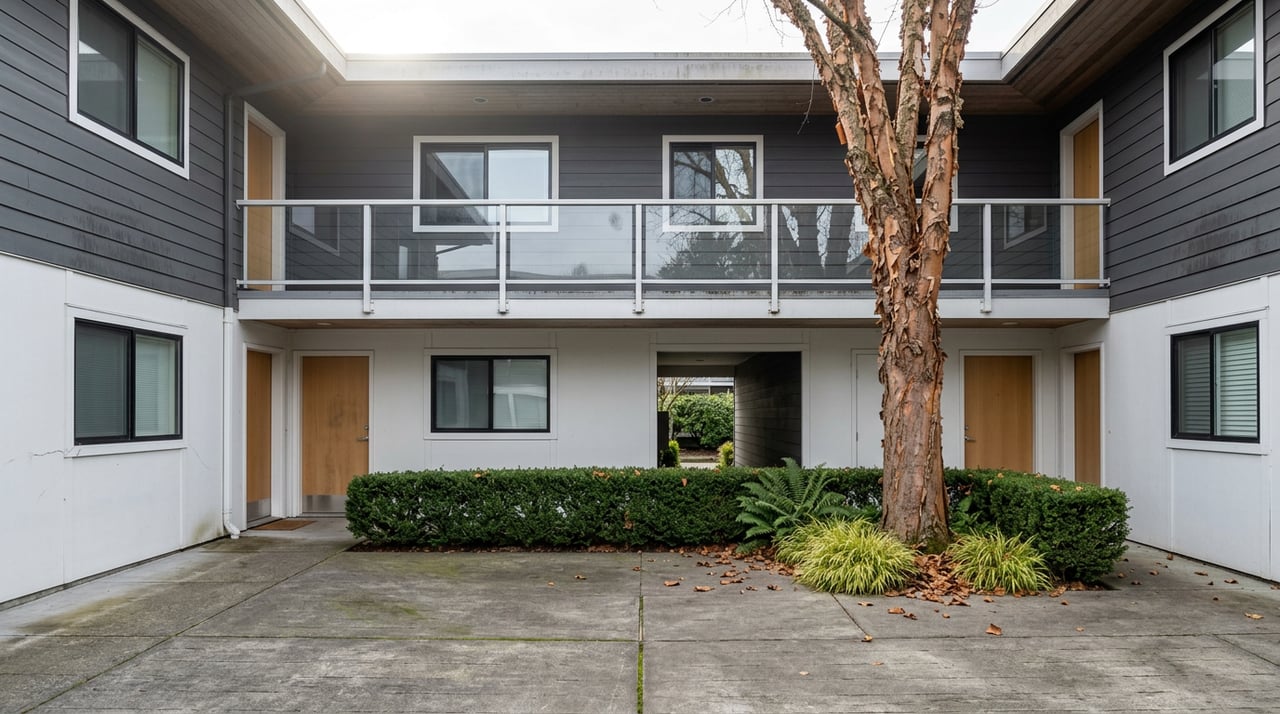
Crossroads, Factoria, and the older mid-rises along Main Street and Bellevue Way are where the gap is widest. These are Bellevue's most accessible condo price points, the buildings where a first-time buyer or a household priced out of downtown can still find a two-bedroom unit for a fraction of what a comparable high-rise unit costs. Many were formed well before the July 2018 cutoff, which means many of their boards spent years outside the WUCIOA reserve study section entirely. A board that has kept dues low by underfunding its reserves is exactly the kind of association a routine building envelope inspection can turn into a sudden, expensive special assessment discussion, and under the current disclosure rules that discussion has to show up in the certificate the moment it happens, not stay buried in board minutes only insiders ever read.
The affordability advantage of an older, cheaper condo can look real on the listing sheet and evaporate at the closing table, once the paperwork the new law requires actually gets produced.
"PURCHASERS OF THIS UNIT SHOULD CAREFULLY REVIEW THE FINANCIAL OBLIGATIONS OF MEMBERS OF THE ASSOCIATION."
That line, drawn directly from the statutory disclosure required on every Washington resale certificate, is not boilerplate. It is the entire point of the document.
Does this apply to single-family homes with an HOA, not just condos? No. The statutory resale certificate under RCW 64.34.425 and RCW 64.90.640 applies to condominium units specifically. Detached homes in a planned community typically go through a separate HOA disclosure addendum, not this certificate.
Can a buyer agree to waive the five-day review period to speed things up? No. The review period is non-waivable under state law, regardless of what the buyer and seller agree to in the purchase contract.
If the association has no current reserve study, does that stop the sale? Not automatically, but the certificate must include a specific statutory warning stating that a current reserve study is missing and that insufficient reserves could require a special assessment. Many buyers treat that disclosure as a serious flag worth negotiating around.
Will my older building's resale certificate get longer because of the 2026 changes? Not yet. Buildings formed before July 2018 still use the 20-item format under RCW 64.34.425 until the broader 2028 transition. What changed already is the reserve study obligation behind that same form.
This is general information about how Washington's resale certificate process works, not legal or financial advice. Every association's documents are different, and an attorney or lender should review the specifics of your building before you rely on any of it.
If you're weighing whether to sell a Bellevue condo this year, or you're trying to figure out what a building's paperwork actually says about its financial health before you write an offer, I'd be glad to walk through it with you. Let's Connect.
Stay up to date on the latest real estate trends.


Connect with a real estate professional who values trust, insight, and personal attention. Every step is guided by a deep understanding of what “home” truly means.